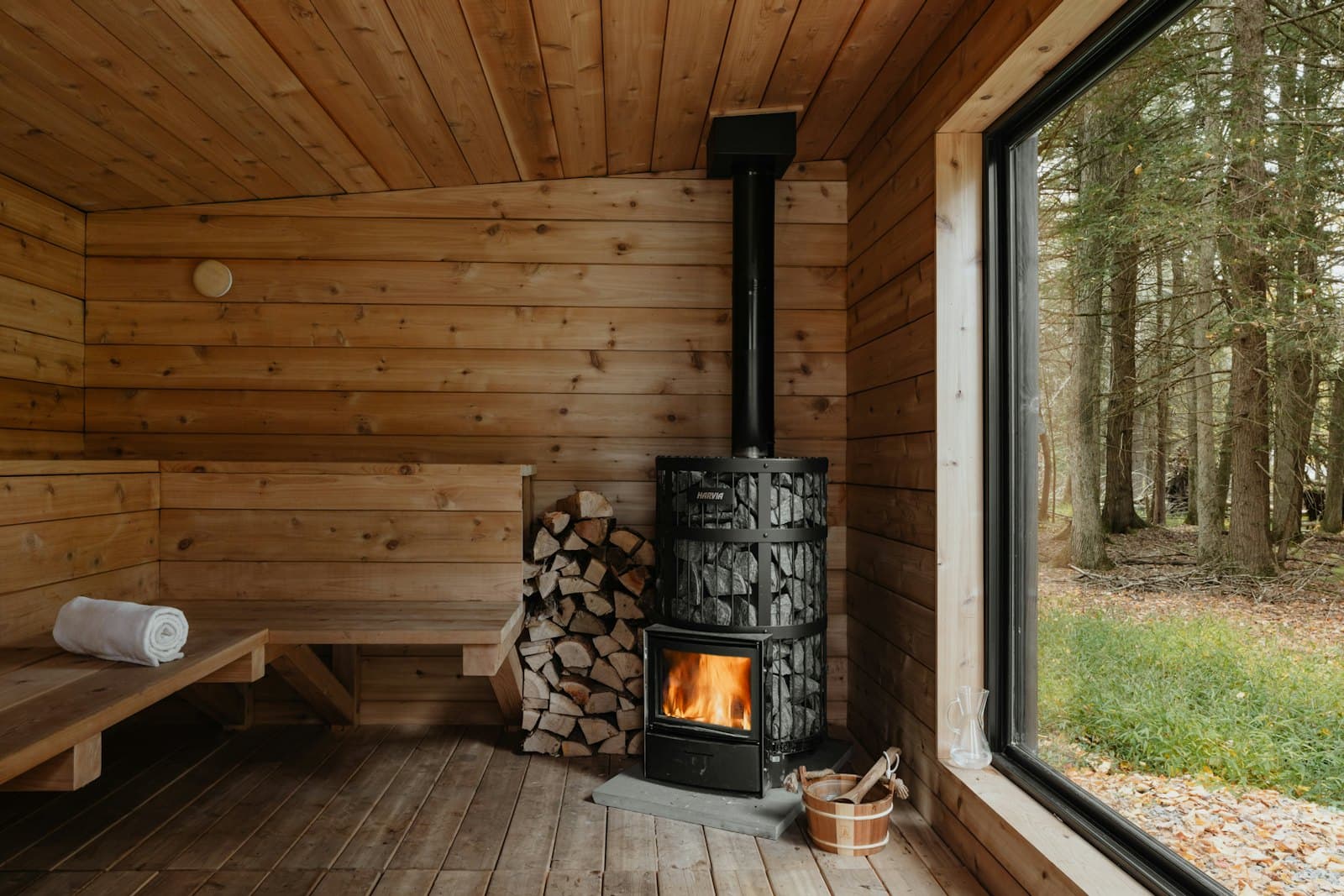
When a business decides to add heat as a service, the first question is which type of sauna to install. There's no single answer: the infrared, the Finnish (dry), and the barrel (wood-fired) offer different experiences and, above all, require very different installations. Understanding those differences before you buy saves you construction work and money.
How each one heats
The infrared sauna doesn't heat the air in the room; it emits radiation that warms the body directly. It runs at relatively low temperatures, 45 to 60 degrees Celsius, which makes it more tolerable for anyone who can't handle extreme heat. The Finnish sauna heats the air with a heater and stones, reaching between 70 and 100 degrees; you can pour water over the stones to spike humidity. The wood-fired barrel sauna works on the same principle as the Finnish one, but fire is the heat source and it always goes outdoors.
What heat can offer
- Relaxation: heat may help loosen muscle tension and bring on a state of calm.
- Circulation: evidence suggests passive heat may support blood-vessel dilation and blood flow.
- Perceived detox: heavy sweating is part of the experience clients want, though actual "detoxification" is modest.
- Sleep: an afternoon heat session may help some people fall asleep more easily thanks to the temperature drop that follows.
How it's used
With infrared, the usual session is 20 to 40 minutes at 45–60 degrees, several times a week. With Finnish or barrel saunas, sessions are shorter and more intense: 8 to 15 minutes at 70–100 degrees, ideally in heat cycles followed by a break or by cold. Contrast with a cold plunge amplifies the experience and is highly sought after in spas and retreats.
Which client fits which
- Hotels and spas: the Finnish or barrel sauna delivers the "classic" experience a guest expects; the barrel also adds visual value in outdoor spaces and gardens.
- Gyms and clinics: infrared is easier to operate, takes little space, and allows long, gentle recovery sessions.
- Retreats: the wood-fired barrel fits outdoor settings and guided experiences.
Installation and power
The infrared usually arrives as a pre-assembled cabin (flat-pack): it's set up indoors and only needs a 220V outlet. It's the simplest. The wood-fired barrel uses no electricity, goes outdoors, and needs a spot with smoke ventilation and fire clearance; assembly is quick but requires outdoor space. The Finnish sauna is the most demanding: it needs build-out, a room with good ventilation, electrical work for the heater, and suitable wood paneling.
The flat-pack infrared sauna is the fastest entry point: a pre-assembled indoor cabin and a 220V outlet. The barrel needs no electricity but requires outdoor space and smoke ventilation. The Finnish sauna requires build-out and dedicated ventilation, so it pays to plan it well in advance.
The recommendation is to start with the infrared if you want to add heat with the least construction and the lowest operational risk. If your offering aims at the traditional spa experience and you have outdoor space, the wood-fired barrel is an excellent second step. The Finnish sauna makes sense when heat is a central pillar of the business and the construction investment is worth it.